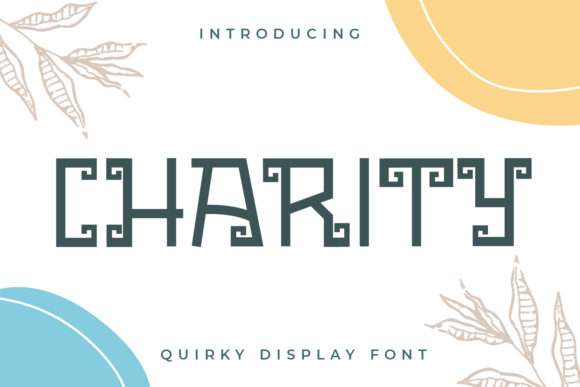
Charity: The Quirky Display Font for Down-to-Earth Design
In a digital landscape saturated with sterile, minimalist sans-serifs and overly ornate serif displays, finding a typeface that strikes the right balance between approachability and professionalism can feel like searching for a needle in a haystack. Enter Charity, a display font that brings a refreshing dose of casual charm to any project. It is not just another font; it is a design tool that feels incredibly down to earth, easy to read, and surprisingly versatile.
If you are a graphic designer, a small business owner, or a content creator looking to add a touch of personality without sacrificing clarity, Charity might be exactly what your creative workflow needs. This article explores why this quirky yet cute font deserves a spot in your toolkit and how it can elevate everything from social media graphics to full-scale branding campaigns.
What Makes Charity Stand Out?
At first glance, Charity presents itself as a friendly, hand-drawn style display font. However, its appeal lies deeper than mere aesthetics. The character shapes are designed with a natural flow that mimics human handwriting but retains the legibility required for professional use. This "quirky and cute" classification often leads designers to underestimate its utility, but Charity proves that whimsy and functionality can coexist beautifully.
The font’s casual charm makes it instantly relatable. In an era where consumers crave authenticity over polished perfection, Charity offers a visual language that feels genuine. It avoids the coldness of rigid geometric fonts while steering clear of the illegibility that plagues many script fonts. Instead, it sits comfortably in the middle ground, offering a voice that is warm, inviting, and easy on the eyes.
Key Characteristics
- High Legibility: Despite its decorative nature, Charity remains highly readable across various sizes and contexts.
- Versatile Tone: It can convey playfulness for children's brands while maintaining enough structure for modern lifestyle blogs.
- Natural Flow: The letterforms have organic curves that prevent the design from feeling stiff or artificial.
- Visual Weight: Its balanced weight allows it to serve as both a headline anchor and a secondary text element in certain layouts.
Practical Applications Across Industries
One of the strongest arguments for using Charity is its adaptability. Because it fits perfectly into so many different styles, it reduces the friction in the design process. You do not need to hunt for three different fonts to create a cohesive look; Charity often serves as the perfect standalone solution or a powerful accent font.
Branding and Logo Design
For entrepreneurs and startups, establishing a brand identity that feels trustworthy yet innovative is crucial. Charity is ideal for logos in industries such as artisanal food products, boutique retail, wellness centers, and creative agencies. Its down-to-earth vibe suggests transparency and honesty—values that resonate deeply with modern consumers. When paired with clean, simple imagery, Charity adds a human touch to corporate identities that might otherwise feel too corporate.
Digital Content and Web Design
Blogger and publishers know that user experience (UX) is heavily influenced by typography. A font that is easy to read keeps visitors on the page longer. While body text usually requires more neutral typefaces, Charity shines in hero sections, pull quotes, and call-to-action buttons. Imagine a blog post about mental health or personal growth featuring a large, engaging quote set in Charity. The font’s gentle curves soften the message, making it feel more supportive and less clinical.
Furthermore, for educational websites or e-learning platforms, Charity can make learning materials feel less intimidating. Its friendly appearance encourages engagement, particularly for younger audiences or those new to a subject matter.
Print Media and Merchandise
The versatility of Charity extends seamlessly into physical products. It is a favorite among print-on-demand creators for t-shirt designs, tote bags, and mugs. The font’s "cute" factor appeals to gift-givers looking for unique, personalized items. Whether you are designing invitations for a baby shower, a birthday party, or a casual wedding, Charity adds a layer of warmth that standard fonts lack.
Consider a local bakery launching a new line of cupcakes. Using Charity for the packaging labels creates an immediate emotional connection with customers. It signals that the product is handmade, crafted with care, and made by real people—not a faceless factory.
Why Usability Matters in Font Selection
Selecting a font is not just about picking something that looks good in isolation; it is about how it performs in the real world. Charity excels in usability because it does not require extensive tweaking to look professional. Many display fonts require careful kerning adjustments or specific pairing strategies to avoid looking chaotic. Charity, however, comes with a built-in harmony.
This efficiency translates to time savings for freelancers and agencies. When a font is inherently well-balanced, designers spend less time fixing spacing issues and more time focusing on layout, color, and overall concept. For busy professionals managing multiple client projects, this ease of implementation is a significant productivity booster.
Enhancing Communication Through Typography
Typography is a form of non-verbal communication. The way text looks influences how the message is perceived. Charity communicates friendliness, accessibility, and creativity. By choosing this font, you are subtly signaling to your audience that you value their comfort and attention. In marketing, this subtle cue can increase engagement rates, as users are more likely to interact with content that feels welcoming rather than exclusionary or overly formal.
Realistic Considerations for Implementation
While Charity is incredibly versatile, it is important to use it strategically to maximize its impact. Here are some practical tips for getting the most out of this typeface:
- Pairing Strategies: Charity works best when paired with simpler, neutral fonts for body text. A clean sans-serif or a classic serif can provide the necessary contrast, allowing Charity to shine as the focal point without overwhelming the reader.
- Contextual Appropriateness: Avoid using Charity for dense blocks of text or legal documents. Its decorative nature is best reserved for headlines, titles, short phrases, and emphasis. Overusing it can lead to visual fatigue.
- Color and Texture: Experiment with colors and textures to enhance Charity’s personality. Soft pastels can amplify its cute aspect, while bold, dark colors can give it a stronger, more impactful presence suitable for posters and banners.
- Scalability Testing: Always test the font at various sizes. While it is legible at larger scales, ensure it remains clear when scaled down for mobile devices or small print materials.
Conclusion
Charity is more than just a pretty face in the world of typography. It is a functional, expressive, and adaptable tool that bridges the gap between playful creativity and professional polish. Whether you are designing a logo for a new startup, creating engaging social media content, or printing invitations for a special event, Charity offers a reliable way to inject personality into your work.
In a market that increasingly values human connection, having a design asset that feels authentic and approachable is a competitive advantage. By adding Charity to your creative arsenal, you are not just choosing a font; you are choosing a voice—one that is clear, charming, and ready to connect with your audience on a deeper level. So, go ahead and let your next creative idea take flight with the down-to-earth elegance of Charity.